- Under US law an AI cannot own code, and the Copyright Office says code generated from prompts alone has no copyright owner at all. Copyright starts with a human author, so the parts of your software worth owning are the parts people wrote, chose or reworked.
- Code your employees write with AI tools belongs to your business, as their other work does. Code an outside developer or studio writes belongs to them until they sign it over to you in writing.
- A paid invoice does not move copyright from a contractor to you. The contract needs a signed clause assigning all rights in the delivered code, including code produced with AI tools.
- Ask every developer which AI tools they use and to deliver the source code into an account you control. Ownership on paper is worth little if the code lives in someone else's account.
Who owns AI generated code in the United States depends on who wrote each part. No one owns the parts an AI produced on its own, because copyright needs a human author. The parts people wrote, selected or reworked do carry copyright, and they belong to whoever employed those people, or to you if the people signed them over in writing.
If you run a business and pay someone else to build your software, that second half is the one to worry about. The AI question gets the headlines. The contract question is the one you can do something about.
We're a software studio, not a law firm, so treat this as a map for the conversation with your lawyer.
Can an AI Own the Code It Writes?
No. An AI system cannot be the author or the owner of anything under US copyright law, and since March 2026 the leading case on it has run out of appeals.
That case is Thaler v. Perlmutter. Stephen Thaler applied to register an image made by his AI system, listing the machine as the sole author. The Copyright Office refused, and in March 2025 the US Court of Appeals for the D.C. Circuit agreed with the refusal, holding that the Copyright Act "requires all eligible work to be authored in the first instance by a human being."
Thaler asked the Supreme Court to hear the case. The Supreme Court docket records the answer on 2 March 2026: "Petition DENIED." The appeals court ruling stands.
The case was about a picture, and the rule covers code just as well. Your AI coding assistant has no claim on your software. The open question is whether anyone does.
Is AI-Generated Code Copyrighted at All?
On AI generated code copyright, the US Copyright Office's answer is that the code is protected only where a person's own creative work shows up in it. It set out where that line falls in Copyright and Artificial Intelligence, Part 2: Copyrightability, published in January 2025.
Three findings from the report matter for software.
Prompts alone don't make you the author. The Office concludes that "given current generally available technology, prompts alone do not provide sufficient human control to make users of an AI system the authors of the output." A developer who types "write a function that calculates overtime" and pastes in what comes back has not authored that function.
Using AI as a tool is fine. The report says that "neither the use of AI as an assistive tool nor the incorporation of AI-generated content into a larger copyrightable work affects the availability of copyright protection for the work as a whole." Its section on assistive uses lists detecting errors in software code among them, and a footnote cites developers who use automated tools to refactor code.
Choosing, arranging and reworking count. People keep copyright in "the creative selection, coordination, or arrangement of material in the outputs, or creative modifications of the outputs."
Real software sits across all three. A developer designs how the parts fit together, asks the AI for a hundred small pieces, rewrites half of them, rejects some, and wires the rest into the design. The design and the rewrites are human work. A function accepted as generated, unchanged, probably carries no copyright.
The report does not say where the line falls for a codebase built this way, and we haven't found a court that has. Expect any future argument over a particular app to turn on records of who wrote what.
Who Owns the Code Your Developer Writes With AI?
The human-written parts belong to the employer if the developer is your employee, and to the developer if they're a contractor, unless they sign the rights over to you. AI tools change nothing here, because this rule is about people.
For employees, US law treats code written "within the scope of his or her employment" as a work made for hire, and under section 201(b) the employer counts as the author. Your in-house developer's work is yours.
Who owns code written by a contractor? The contractor does, until they sign it over, and that is where owners get caught. The same definition covers commissioned work only in nine listed categories, such as a contribution to a collective work, a translation or a test, and only with a signed agreement. Custom business software doesn't sit comfortably in any of the nine. The dependable route is a transfer of ownership, and section 204(a) says a transfer "is not valid unless" it is "in writing and signed by the owner of the rights conveyed."
So picture a freelancer who builds your quoting tool over three months, paid in full, on an email agreement that never mentions ownership. The invoices are settled. The copyright in every line they wrote, chose or reworked is still theirs. You'd likely be allowed to keep using the tool, and you'd be on weak ground if you tried to stop them reselling it to the shop down the road.
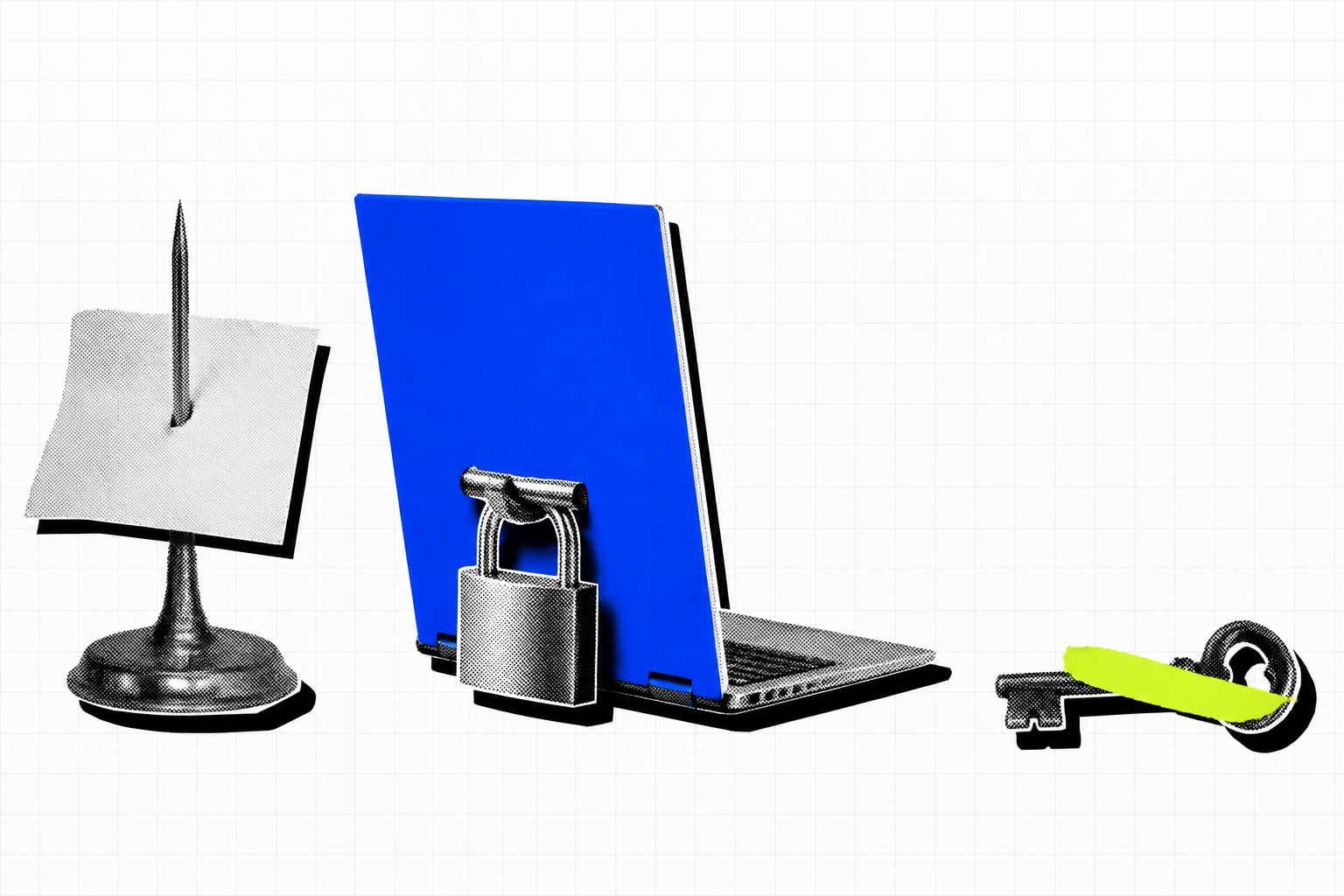
AI makes this worse in one specific way. When part of the code has no copyright at all, the human-written parts are the only part anyone can own, so the clause that moves them to you carries more weight.
Is your code signed over?
- ASSIGNMENT CLAUSE??
- AI TOOLS NAMED??
- SOURCE IN YOUR ACCOUNT??
- LICENCES LISTED??
Planning a build? Tell us what it needs to do. We'll scope it in one call and walk you through who owns what before you sign anything.
SCOPE_MY_BUILD→Does It Matter If Some of the Code Has No Owner?
For a business running its own operations software, it matters less than it sounds. Copyright stops other people copying your code. Someone has to get a copy before that question comes up.
Your day-to-day protection is plainer: keeping the code where only people under contract can see it.
Where unowned code starts to bite is when the software itself is what you sell. If you plan to license the product to other businesses, raise money on it, or sell the company, a buyer's lawyer will ask how it was written and who signed what. "An AI wrote a lot of it and the contractor never assigned the rest" is an awkward answer in a sale.
The AI tool's own terms sit on top of all this. Coding assistants publish terms on who holds rights in their output and on whether your code is used to train them, and they differ between providers and between free and paid plans. A provider can only hand over rights it has, so its terms can't create a copyright the law says doesn't exist.
My take: the AI part is the least of an owner's worries. Fix the contract and the AI question shrinks to a footnote.
How AI Code Ownership Works Outside the US
Other countries split into two camps, and the Copyright Office's report summarises both.
Some insist on a human author, as the US does. Korea's official guidance says that "only a natural person can become an author" and that where a person modifies an AI output, only the part they changed is protected. Japan's government guidelines say it is decided case by case, weighing the prompts, the number of attempts, the human's selection and later corrections.
Others have older laws written for "computer-generated" works. The UK statute protects works generated by computer where there is no human author, and names as author the person who made "the arrangements necessary for the creation of the work." India's Copyright Act names "the person who causes the work to be created." Hong Kong and New Zealand have similar rules. The report notes it is unclear whether or how these apply to today's AI tools.
We're based in Bengaluru and build for businesses abroad, so two countries' laws can touch one codebase. A contract that assigns all rights in the delivered code, whatever either country's law says those rights are, is the simplest way to narrow the gap, and your lawyer can say which country's law the contract should name.
What to Put in Your Software Development Contract
Four clauses cover AI code ownership for a business commissioning software. Ask for them before work starts, in the signed contract.
1. Assignment of all rights in the deliverables. The developer assigns to your business all copyright and other rights in the code, designs and documents they deliver, on payment. Signed by both sides. 2. AI tools named and covered. The developer lists the AI tools they'll use, confirms those tools' terms allow commercial use of the output, and confirms the assignment covers code produced with them. 3. Source code in your account. Code goes into a repository your business owns, from the first week, with the developer added as a collaborator. 4. Third-party code listed. Any open-source libraries or licensed components are listed with their licences, so you know what you're allowed to do with the finished product.
None of these is unusual. A developer who pushes back on the first one is telling you who they think owns your software.
For what it's worth, our own pricing page says the client owns the codebase, and our homepage says we use AI-assisted tooling across the entire build. Both statements belong in the contract too. If you've had an internal tool built quickly with AI, our post on vibe coding internal tools covers what tends to break before production. And when you compare quotes, the questions in our post on what custom software costs sit well next to these four.
When did you last read the ownership clause in the contract for the software your business runs on?
FAQs
Q.Can AI generated code include someone else's copyrighted code?
It can, because AI models learn from public code, including open-source code released under licence terms. Ask your developer to scan the codebase and its dependencies for licence obligations before launch.
Q.Do I have to tell the Copyright Office my software was written with AI?
Only if you register it. The Office's registration guidance asks applicants to disclose AI-generated material that is more than de minimis and to describe the human author's contribution.
Q.What happens to ownership if I stop paying my developer halfway through?
If they're a contractor, whatever they have written stays theirs until a signed assignment covers it. You can ask for the assignment to take effect at each paid milestone, so you own what you have paid for so far.
Q.Can my developer reuse code they wrote for me on another client's project?
Not the code they have assigned to you. Code they wrote before your project and built into it can stay theirs, so the contract should give you a permanent licence to use any of it that ends up in your software.
References
- U.S. Court of Appeals for the D.C. Circuit, Thaler v. Perlmutter, No. 23-5233, decided 18 March 2025
- Supreme Court of the United States, Docket No. 25-449, Thaler v. Perlmutter, petition denied 2 March 2026
- U.S. Copyright Office, Copyright and Artificial Intelligence, Part 2: Copyrightability, January 2025
- 17 U.S. Code section 101, definition of "work made for hire" (Cornell Legal Information Institute)
- 17 U.S. Code section 201, ownership of copyright
- 17 U.S. Code section 204, execution of transfers of copyright ownership